
Learning from the Best: Advancing Lower Limb Muscle Injury Care at The Move Clinic With Carles Pedret
At The Move Clinic, continuing professional development is central to how we deliver high-quality musculoskeletal care. Medicine, rehabilitation and sports injury management continue to evolve, and we believe our patients should benefit from the latest thinking in diagnosis, treatment and return-to-sport decision-making.
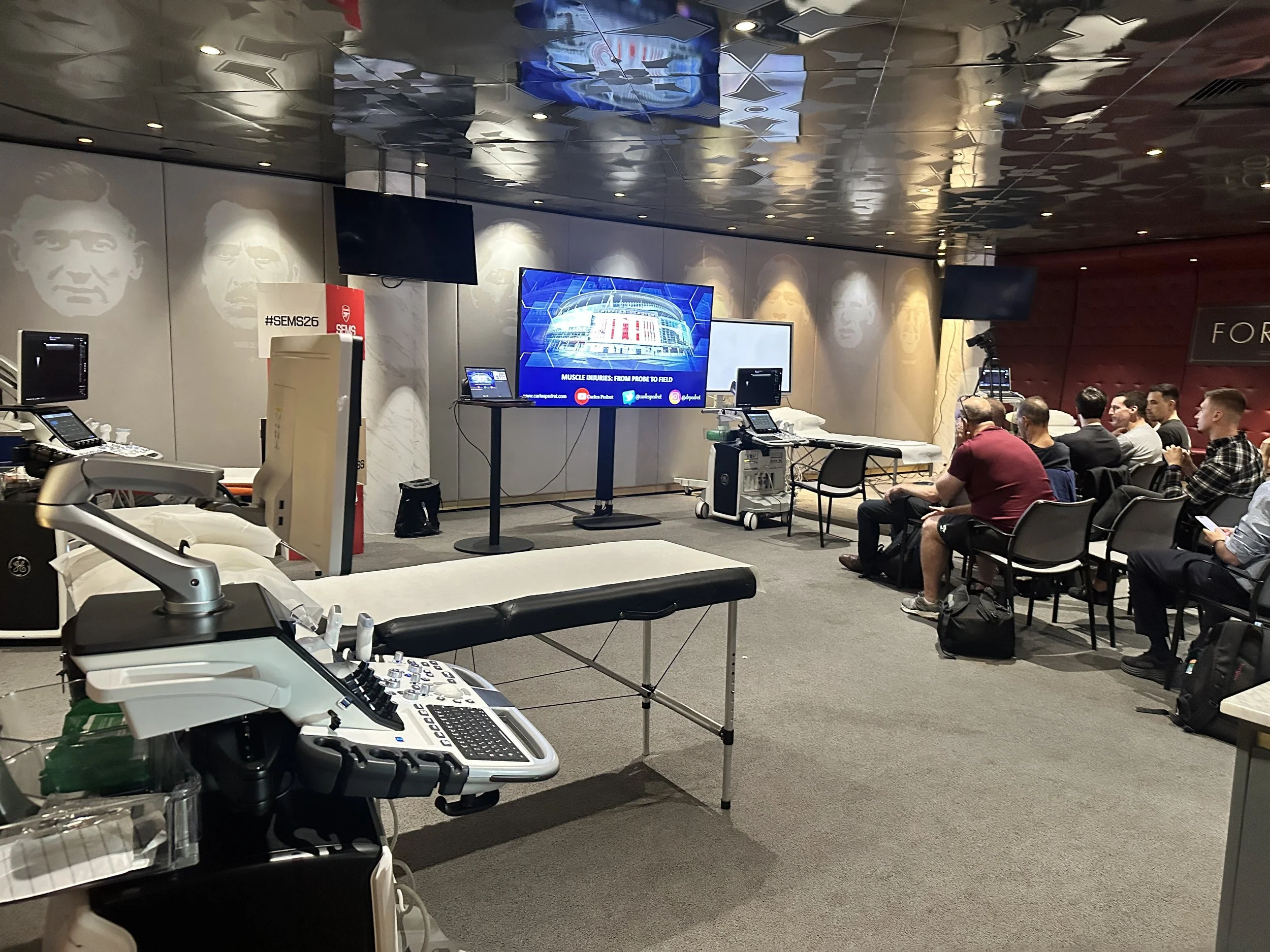
Clinic Directors Sam Bourgein and Joe Meara recently had the opportunity to meet and learn from Dr Carles Pedret, an internationally renowned specialist in the diagnosis, management and rehabilitation of lower-limb muscle injuries.
For Sam and Joe, the learning was particularly relevant to an area we see regularly at The Move Clinic: acute muscle injuries affecting the hamstring, quadriceps, calf and other muscles of the lower limb.
Why an accurate diagnosis matters
A sudden muscle injury can seem straightforward. An athlete feels a pull, experiences pain and assumes they have simply “strained a muscle”.
In reality, muscle injuries can vary considerably.
The location of the injury, structures involved, extent of tissue damage and relationship to the muscle-tendon junction or intramuscular tendon can all influence rehabilitation and expected recovery. Two people with apparently similar hamstring injuries, for example, may require very different approaches to management.
This is why an early, accurate assessment can be so valuable.
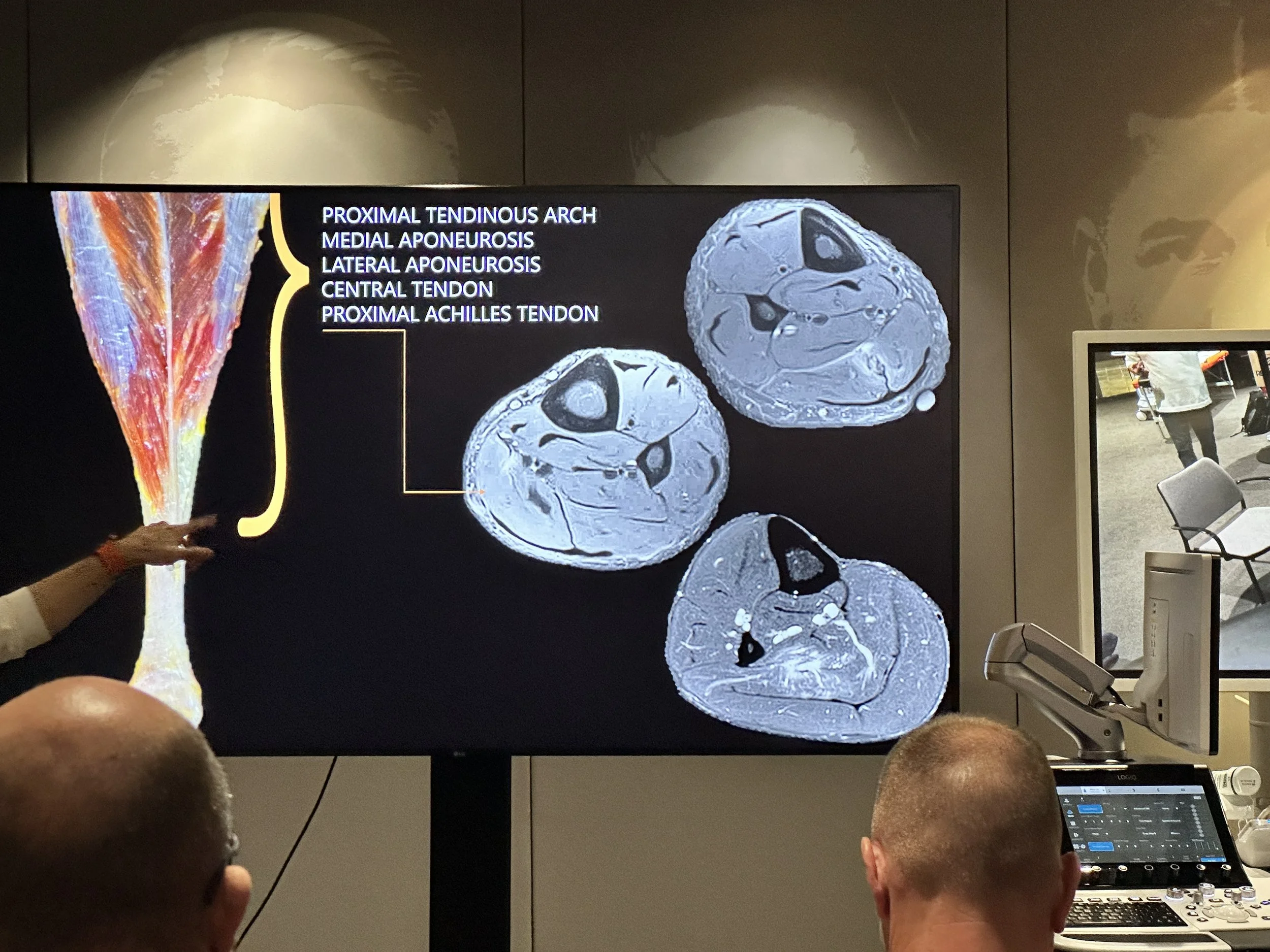
At The Move Clinic, we combine a detailed clinical assessment with diagnostic musculoskeletal ultrasound where appropriate, allowing us to investigate acute lower-limb muscle injuries and help patients understand exactly what they have injured.
From urgent diagnosis to a clear management plan
For athletes and active individuals, one of the most frustrating aspects of an injury is uncertainty.
What have I injured? How serious is it? What can I do now? When can I start running again? When can I return to training?
Our aim is to provide clarity as early as possible.
Where clinically appropriate, diagnostic ultrasound can form part of the initial assessment and help identify the location and characteristics of an injury. This information can then be combined with the clinical examination, mechanism of injury and functional testing to develop an individual management plan.
Importantly, imaging should never be considered in isolation. A scan is one part of the overall clinical picture. The goal is not simply to identify an abnormality on an image, but to understand what that finding means for the individual standing in front of us.
Learning from world-leading expertise
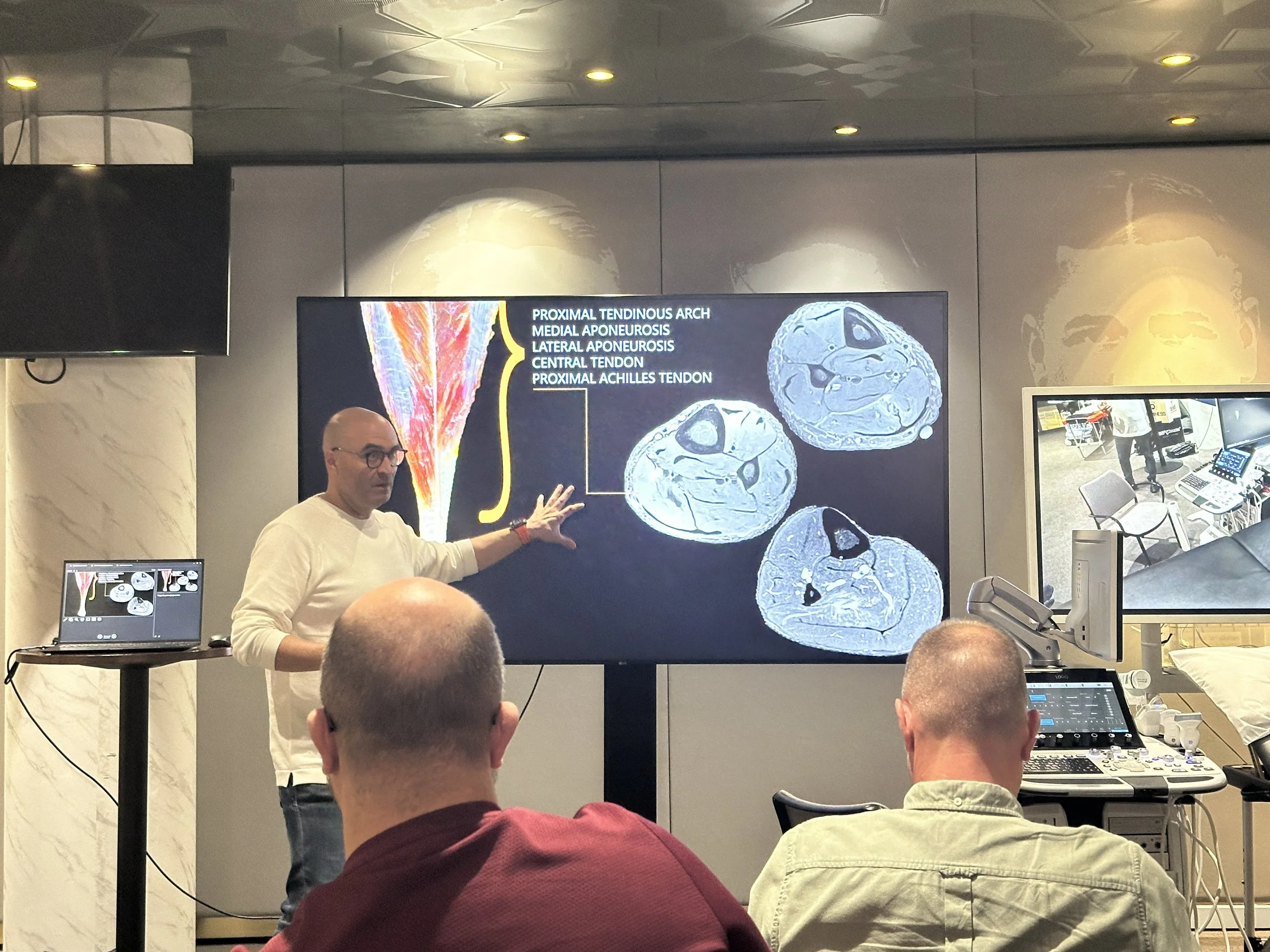
The opportunity for Sam and Joe to learn directly from Carles Pedret was therefore hugely valuable.
His work has helped advance understanding of muscle injury assessment, ultrasound imaging, rehabilitation and return-to-sport decision-making, particularly within elite sport.
For The Move Clinic, learning from clinicians working at this level allows us to continually challenge and refine our own clinical practice.
The important question following any course or educational event is not simply “What did we learn?” but rather:
“How can we use this to improve the care our patients receive?”
In the case of lower-limb muscle injuries, that means improving how we assess injuries, interpret imaging findings, communicate prognosis and integrate diagnosis with progressive rehabilitation.
Diagnosis is only the beginning
An accurate diagnosis is valuable, but it is not the end point.
Successful recovery from a muscle injury requires progressive rehabilitation that restores strength, movement capacity, confidence and the ability to tolerate the demands of the individual's sport or activity.
At The Move Clinic, our clinicians can work together across the patient's journey — from initial assessment and diagnostic ultrasound through physiotherapy, sports rehabilitation and strength and conditioning.
For a runner, this may involve gradually rebuilding running volume and higher-speed exposure. For a footballer, rugby player or hockey player, rehabilitation may need to progress towards sprinting, acceleration, deceleration and changes of direction. Other athletes may require jumping, kicking or sport-specific loading before they are ready to return.
The objective is not simply to wait until the pain disappears.
We want the injured tissue — and the athlete as a whole — to be adequately prepared for the demands they are returning to.
Making specialist assessment accessible
Many of the principles used in elite sport are equally relevant to recreational athletes and active people.
You do not need to be a professional footballer to want an accurate diagnosis after injuring your hamstring.
You do not need to be an elite runner to want to understand why your calf keeps breaking down.
And you should not necessarily have to spend weeks wondering whether an injury is minor or whether it requires more structured rehabilitation.
Our aim at The Move Clinic is to make high-quality musculoskeletal assessment, diagnostic ultrasound and rehabilitation accessible to the wider community.
Continuing to develop at The Move Clinic
Meeting and learning from Carles Pedret was a fantastic opportunity for Sam and Joe and forms part of our wider commitment to continually developing the services available at The Move Clinic.
Whether we are assessing an acute hamstring injury, recurrent calf problem, quadriceps injury or another lower-limb muscle complaint, our goal remains the same:
to provide an accurate diagnosis, explain the injury clearly and create a structured pathway from injury through rehabilitation and back to the activities that matter to you.
If you have recently sustained a lower-limb muscle injury or are struggling with a recurrent muscle problem, you can book a Consultant Physiotherapist and Diagnostic Ultrasound appointment with The Move Clinic for clinical assessment, imaging where appropriate and a personalised treatment and rehabilitation plan.
The Move Clinic — helping people move better and live better.