
At The Move Clinic, we're always looking for ways to improve how we assess, treat and support our patients. That's why we're excited to introduce VALD strength testing and force plate technology into our clinical assessments and rehabilitation programmes.
Whether you're recovering from surgery, managing a long-term injury, looking to improve your balance or aiming to return to competitive sport, this technology allows us to measure your physical performance with greater precision.
Our goal remains simple: to help people move better and live better.
What is VALD Technology?
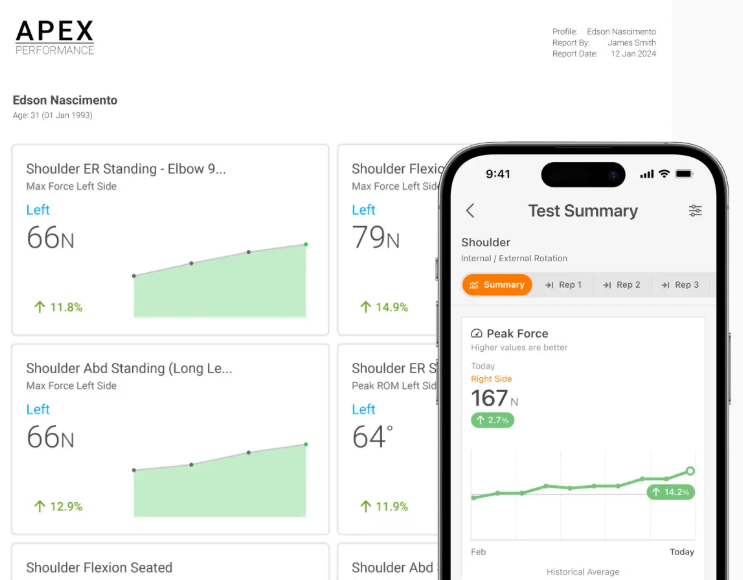
VALD is a world-leading provider of technology used to assess physical performance, strength and movement. Its equipment is used across elite sport, physiotherapy and rehabilitation settings.
At The Move Clinic, we're introducing two key assessment tools:
1. Dynamometry – Measuring Muscle Strength
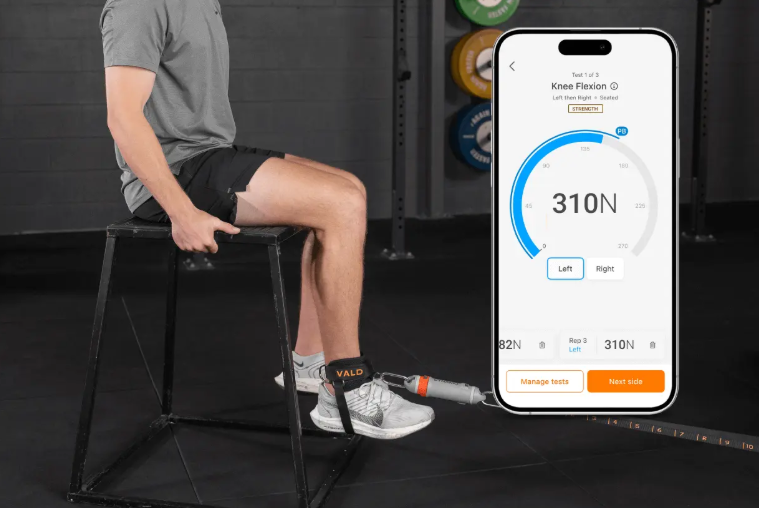
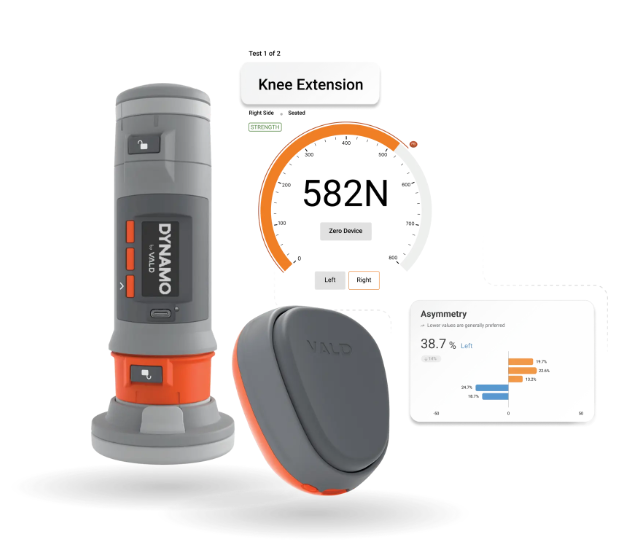
Dynamometry allows us to objectively measure how much force your muscles can produce.
Traditionally, physiotherapists have assessed strength by asking patients to push against their hands or perform certain exercises. Although these assessments remain valuable, they can sometimes miss smaller differences in strength.
Using VALD dynamometry, we can measure muscle force numerically, allowing us to identify weaknesses, compare limbs and monitor improvements throughout rehabilitation.
This can be particularly useful for:
Identifying quadriceps weakness following knee surgery.
Assessing shoulder strength following rotator cuff injuries.
Measuring calf strength following Achilles tendon injuries.
Comparing hamstring strength following muscle injuries.
Monitoring improvements in strength during rehabilitation.
Identifying areas that may benefit from targeted strengthening.
Rather than simply saying a muscle feels stronger, we can demonstrate measurable improvements over time.
2. Force Plates – Measuring Balance, Power and Movement
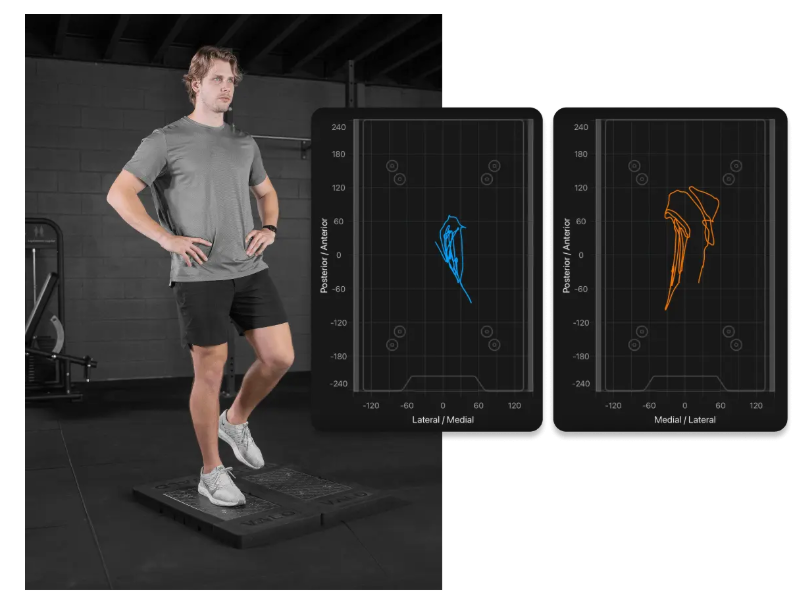
<escape>Force plates are highly sensitive platforms that measure the forces produced when you stand, balance, jump or land on them.</escape>
They allow our clinicians to assess aspects of physical performance that can be difficult to identify through observation alone.
Depending on the assessment, we can measure:
Balance and postural control.
Lower limb power during jumping.
Differences in force production between the left and right legs.
How quickly force can be developed.
Landing characteristics and force absorption.
Changes in physical performance throughout rehabilitation.
This provides valuable information to help us tailor exercise programmes and track progress.
How Can This Benefit Patients of All Ages?
One of the most exciting aspects of this technology is that it isn't just for elite athletes.
From someone in their seventies wanting to improve their balance to a young athlete recovering from an ACL reconstruction, objective testing can provide meaningful information to guide rehabilitation.
Improving Balance, Stability and Confidence
As we get older, maintaining strength and balance becomes increasingly important.
Reduced lower limb strength and impaired balance can contribute to difficulties with everyday activities, including climbing stairs, getting out of chairs and walking confidently.
Using our force plates, we can assess postural sway and balance under different conditions. Combined with functional strength assessments, this helps us identify areas where targeted exercises may be beneficial.
We can then monitor changes over time, helping patients see how their balance and physical capacity are progressing.
For our older patients, including those attending our MOVE Legends programme, this provides another way to support healthy ageing, independence and confidence with movement.
Before Surgery – Preparing Your Body for Recovery
If you're preparing for knee replacement, hip replacement or another orthopaedic procedure, improving strength before surgery can be an important part of your preparation.
Using VALD technology, we can establish a baseline of your muscle strength and physical function before your operation.
This allows us to identify areas of weakness and develop a personalised prehabilitation programme.
For example, someone awaiting knee replacement surgery may have significantly reduced quadriceps strength on their affected side.
By identifying this early, we can focus on improving strength and function before surgery, while also establishing measurements to compare against during recovery.
After Surgery – Tracking Your Recovery
Following surgery, patients often want to know:
"How strong is my operated leg compared with my other leg?"
"Am I making good progress?"
"When can I safely return to my normal activities?"
Our dynamometry and force plate assessments can help answer these questions using objective measurements.
Whether you've undergone ACL reconstruction, knee replacement, hip surgery or another orthopaedic procedure, we can monitor changes in muscle strength, balance and functional performance.
This information helps us guide exercise progression and identify any remaining deficits that may not be obvious during everyday activities.
Importantly, these measurements are used alongside clinical assessment, symptoms and functional goals rather than as standalone decisions about recovery.
Returning to Running and Sport
For runners and athletes, recovering from injury is about more than simply becoming pain-free.
You also need to restore the strength, power and physical capacity required for your sport.
Using VALD technology, we can assess muscle strength and, where appropriate, jumping and landing performance.
This is particularly useful following:
ACL and other knee injuries.
Achilles tendon injuries.
Hamstring and quadriceps muscle injuries.
Ankle sprains.
Running-related injuries.
Return to football, rugby, padel and other sports.
By comparing performance over time, we can identify areas that may need further rehabilitation before progressing to more demanding activities.
Plyometrics – Measuring Explosive Power
Plyometrics involve movements such as jumping, hopping and bounding, which require muscles and tendons to produce and absorb force rapidly.
These abilities are particularly important in sports involving sprinting, jumping and rapid changes of direction.
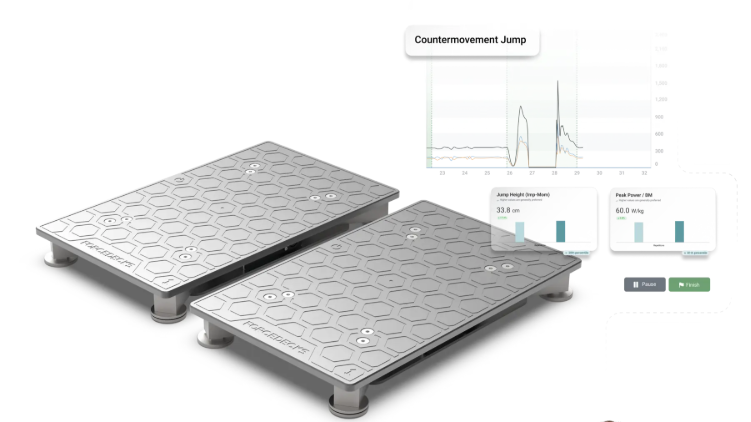
Our force plates allow us to assess aspects of explosive performance through tests such as countermovement jumps and other jumping assessments.
We can examine jump height, force production, power and differences between limbs, depending on the test used.
This helps us understand how effectively an athlete produces force and how their performance changes throughout training or rehabilitation.
For example, an athlete recovering from an ACL injury may regain good quadriceps strength but still demonstrate differences in jumping performance between legs.
Identifying these differences allows us to develop more targeted rehabilitation programmes.
Why Is Objective Testing Important?
One of the biggest challenges in physiotherapy is knowing whether a patient is genuinely improving.
Pain reduction is important, but it doesn't always tell us the full story.
A patient may feel better but still have significant muscle weakness. Equally, someone may feel that their progress has slowed despite measurable improvements in strength or balance.
Objective testing allows us to establish a starting point, set realistic goals and monitor progress throughout rehabilitation.
It also helps us make more informed decisions about exercise progression, rehabilitation and return to activity.
Technology Combined With Clinical Expertise
At The Move Clinic, we believe technology should enhance clinical assessment, not replace it.
Our experienced physiotherapists combine detailed clinical examinations, diagnostic ultrasound where appropriate, strength testing and individualised rehabilitation to provide a comprehensive approach to musculoskeletal care.
VALD technology adds another layer of information, helping us better understand how your body is functioning and where improvements can be made.
Whether you're looking to improve your balance, recover from surgery, overcome an injury or maximise sporting performance, we're excited to bring this technology into our clinic.
Move Better. Live Better.
Our mission at The Move Clinic is to help people move better and live better.
By introducing VALD dynamometry and force plate assessments, we're continuing to develop the tools and services available to support our patients at every stage of life.
From improving everyday strength and independence to returning to high-level sport, we want to help you understand your physical capabilities and make meaningful progress towards your goals.
To find out more about our strength testing, rehabilitation and physiotherapy services, get in touch with The Move Clinic in Oxford.