
Knee Osteoarthritis: From Ultrasound Assessment and Physiotherapy to Injection Treatment in Oxford
By Sam Bourgein | Consultant MSK Sonographer and Advanced Practice Physiotherapist | The Move Clinic, Oxford
Knee osteoarthritis is one of the most common causes of knee pain, stiffness and reduced mobility in adults. Whether you're struggling with stairs, finding your morning walk uncomfortable or experiencing knee pain when playing golf, running or exercising, the right treatment can make a meaningful difference.
At The Move Clinic, we provide a comprehensive approach to knee osteoarthritis treatment in Oxford. We combine specialist physiotherapy, diagnostic musculoskeletal ultrasound, progressive strength and conditioning, and ultrasound-guided injections when clinically appropriate.
Our aim is simple: to help you understand your knee, improve your confidence in movement and maintain the activities you enjoy.
What is knee osteoarthritis?
Knee osteoarthritis is a condition affecting the whole joint, including its cartilage, underlying bone, joint lining and surrounding tissues.
Although often described as wear and tear, osteoarthritis is more complex than cartilage simply wearing away. Changes in the joint can be associated with inflammation, altered movement and reduced muscle strength.
Common symptoms include:
Knee pain when walking, climbing stairs or exercising.
Stiffness after sitting or first thing in the morning.
Swelling or intermittent flare-ups.
Reduced confidence when squatting, kneeling or walking downhill.
Difficulty maintaining previous levels of sport or physical activity.
Importantly, the severity of changes seen on imaging does not always match the amount of pain someone experiences. Treatment should therefore focus on your symptoms, physical function and personal goals rather than scan findings alone.
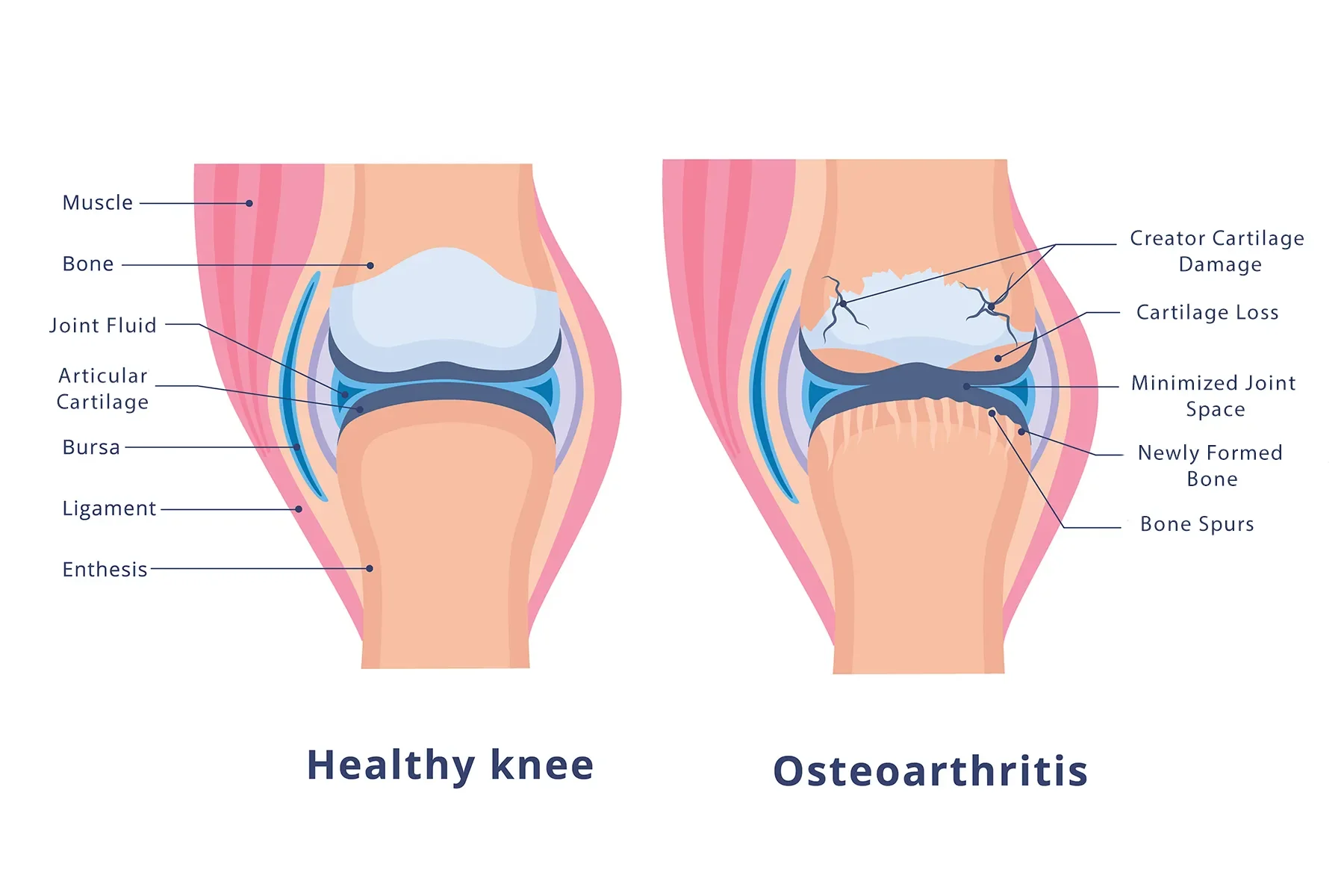
Knee osteoarthrits - www.themoveclinic.co.uk
we assess knee osteoarthritis at The Move Clinic?
Our assessment starts with understanding your symptoms, medical history, previous treatments and what you would like to return to doing.
We examine knee movement, swelling, muscle strength and relevant functional activities, such as squatting, walking and negotiating steps.
Can ultrasound detect knee osteoarthritis?
Musculoskeletal ultrasound can provide valuable additional information about the soft tissues and inflammation around the knee.
During a targeted examination, we may assess:
Joint effusion — excess fluid within the knee.
Synovitis — inflammation or thickening of the joint lining.
Osteophytes — bony changes around the joint margins.
Meniscal extrusion — displacement of the meniscus beyond the joint margin.
Associated tendon problems or Baker's cysts.
Ultrasound is particularly useful when we suspect an additional soft-tissue problem or need to assess swelling before a potential intervention.
However, ultrasound is not necessary to diagnose most cases of knee osteoarthritis. The diagnosis can often be made clinically, while weight-bearing X-rays may be useful when imaging is indicated to assess joint-space narrowing and bony changes. Ultrasound cannot reliably assess every part of the joint or replace X-rays when these are required. See: Musculoskeletal Ultrasound | Schedule Your Expert Ultrasound Today — The Move Clinic
At The Move Clinic, we use ultrasound selectively when it is likely to provide information that changes your management.
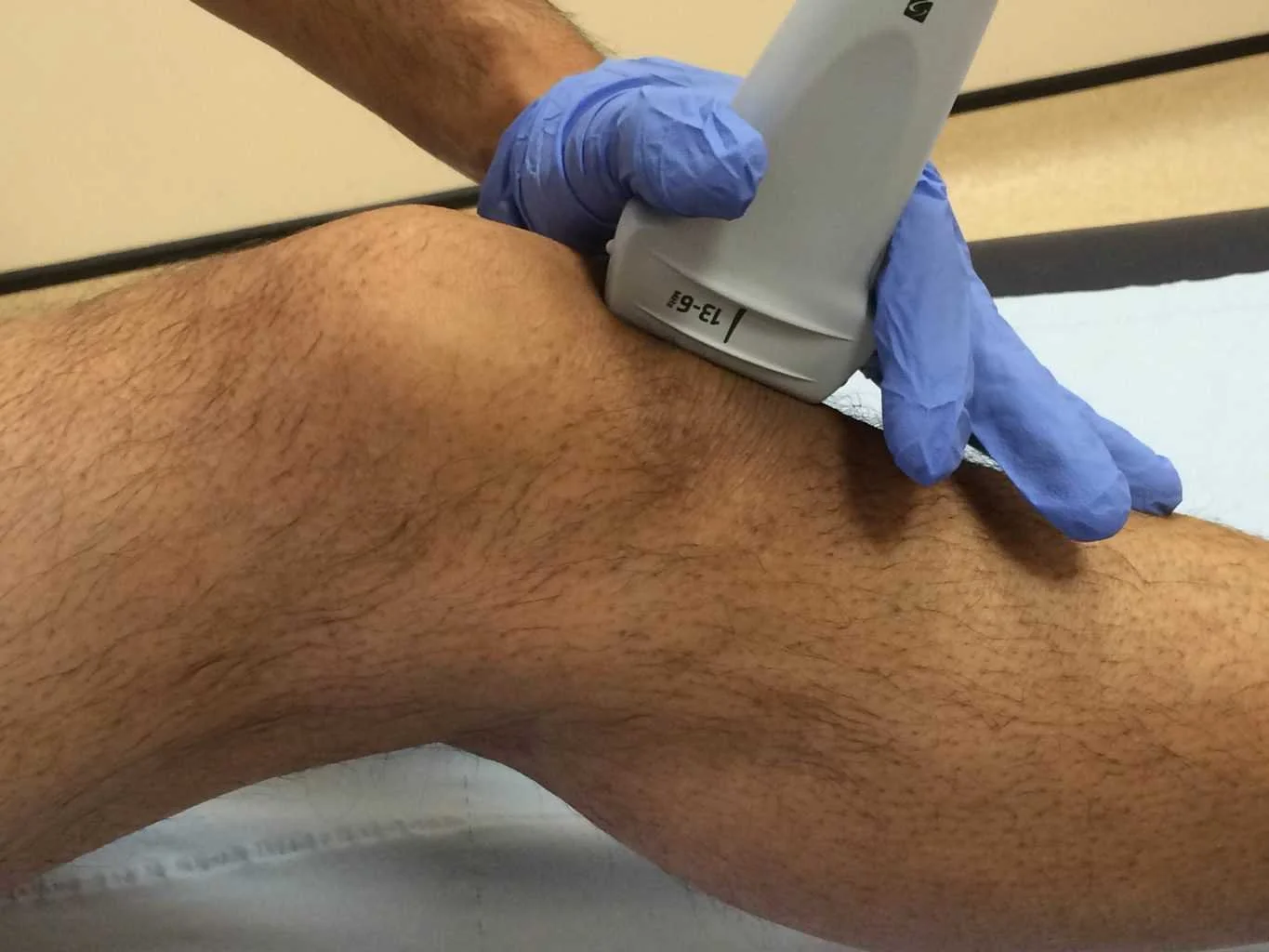
Knee Ultrasound - www.themoveclinic.co.uk
Physiotherapy: the foundation of knee osteoarthritis treatment
For most people with knee osteoarthritis, an individualised exercise programme is the foundation of effective treatment.
It is understandable to reduce activity when your knee hurts. However, prolonged inactivity can contribute to reduced muscle strength, lower exercise tolerance and increasing difficulty with everyday tasks.
Our physiotherapy approach focuses on gradually restoring your confidence and physical capacity.
Treatment may include progressive strengthening of the quadriceps, hamstrings, gluteal and calf muscles, alongside balance training, mobility exercises and activity modification.
We also help you manage flare-ups and establish an exercise programme that fits around your lifestyle.
For those with appropriate goals and clinical needs, our strength and conditioning sessions provide a structured progression from rehabilitation towards independent exercise, sport and long-term fitness.
If weight management is relevant, even modest weight loss can improve symptoms and physical function. This can be addressed alongside exercise without making weight loss a prerequisite for treatment. See: Advanced Physiotherapy | Experience Effective Care Today — The Move Clinic
MOVE Legends: building strength and confidence for the future
For people who want to improve their general strength, balance and mobility in a supportive group environment, our MOVE Legends programme offers a structured introduction to exercise.
MOVE Legends is a six-week programme designed to build functional strength, improve balance and develop confidence with movement. It includes an initial clinical screening, individual goal setting, progressive exercise and measurable outcomes.
Sessions take place on Fridays at 10am at the Mind Over Matters Gym, Harcourt Hill, Oxford.
The programme may be appropriate for people with knee osteoarthritis who are ready for group exercise, following an individual assessment where necessary.
Discover MOVE Legends and our approach to healthy ageing.
When should you consider an injection for knee osteoarthritis?
An injection may be discussed when knee pain remains troublesome despite appropriate conservative treatment, medication is unsuitable or a painful flare-up is preventing you from progressing with rehabilitation.
At The Move Clinic, we consider injections as one potential component of a broader management plan rather than a replacement for strengthening and exercise.
There are several types of injection, and they work in different ways. Their evidence, potential benefits, limitations and costs also vary considerably.
Understanding your knee injection options
1. Corticosteroid injections
Short-term symptom relief
Corticosteroids are anti-inflammatory medicines injected directly into the knee joint. They can reduce inflammation and pain, particularly during a painful flare-up.
They may be considered when pain is interfering with sleep, walking or participation in physiotherapy. NICE advises that relief is generally short-term, typically two to ten weeks. Repeated injections require careful consideration of their potential risks. See: Corticosteroid Injections | Get Pain Relief Today - Book Your Treatment — The Move Clinic
2. Hyaluronic acid injections
Viscosupplementation
Hyaluronic acid is a naturally occurring component of joint fluid. Injections aim to supplement the joint's lubrication and shock-absorbing properties.
Some patients report improvements in pain and movement, but research has not demonstrated sufficiently consistent, clinically meaningful benefits. NICE recommends against offering hyaluronan injections for osteoarthritis. They do not rebuild damaged cartilage. See: Hyaluronic Injections | Enhance Mobility Today – Book Now — The Move Clinic
3. Platelet-rich plasma (PRP) injections
Blood-derived treatment
PRP is prepared from a sample of your own blood, which is processed to concentrate platelets before injection into the knee.
Platelets contain growth factors and signalling proteins that may influence inflammation and the joint environment.
Research suggests PRP may improve pain and function in some people with knee osteoarthritis, although results vary considerably between studies and preparation methods. There is no reliable evidence that PRP regenerates lost cartilage or cures osteoarthritis.
At The Move Clinic, we use the Arthrex ACP Max system. You can read more in our article explaining our PRP approach.
For more infromation see: Platelet Rich Plasma (PRP) Therapy | Enhance Healing Today – Schedule PRP Therapy — The Move Clinic

4. Arthrosamid injections
Non-biodegradable hydrogel
Arthrosamid is an injectable polyacrylamide hydrogel designed to integrate with the synovial tissue lining the knee joint. It is intended to provide sustained symptom relief rather than replace damaged cartilage.
Some clinical studies report improvements in pain and function lasting several years in certain patients. However, the evidence remains limited, particularly regarding long-term comparative effectiveness and safety.
NICE has not issued a positive recommendation for Arthrosamid; its technology assessment selection process identified insufficient evidence.
It may be discussed as a private treatment option following specialist assessment and a detailed explanation of its potential benefits, risks, uncertainties and cost.
See: Arthrosamid | Enhance Mobility Today – Book Now — The Move Clinic
Which knee osteoarthritis treatment is right for you?
There is no single treatment that suits everybody. The decision depends on your symptoms, examination findings, medical history, previous treatment and what you hope to achieve.
For example, someone with relatively mild symptoms who wants to return to recreational sport may benefit from a structured strengthening programme. Someone experiencing a significant inflammatory flare-up may need additional short-term symptom management to help them participate in rehabilitation.
If pain and loss of function substantially affect your quality of life despite appropriate non-surgical treatment, referral for an orthopaedic opinion about knee replacement may be appropriate. You do not have to exhaust every available injection before discussing surgery.
Knee osteoarthritis treatment in Oxford: How The Move Clinic can help
At The Move Clinic, we aim to provide joined-up care, from your initial clinical assessment to progressive rehabilitation and, where appropriate, ultrasound-guided intervention.
Whether your goal is to walk comfortably, return to golf, continue running or simply manage stairs with greater confidence, we can help you develop a treatment plan around what matters to you.
Ready to take the next step?
Book an assessment to discuss your knee symptoms, understand your treatment options and explore an individualised rehabilitation plan.
About | Enhance Movement Today — Book Now — The Move Clinic
Appointments | Book Quality Physiotherapy Now — The Move Clinic